Choosing among the top 10 types of gas engines is not a simple ranking exercise. A small generator engine may suit a remote clinic, while a larger industrial unit may serve a factory’s steady power demand. Buyers need to compare fuel availability, load profile, efficiency, emissions data, service access, and expected operating hours. Details matter. A control panel in a clean plant room faces different demands from an engine beside a dusty agricultural site.
Combustion researcher John B. Heywood’s work offers a useful reminder: engine performance depends on design and operating conditions. This is a paraphrase of his technical work, not a direct quotation. That distinction matters. Gas engines can use natural gas, biogas, or other specified gaseous fuels, but compatibility varies by model. A brochure’s peak output alone rarely tells the full story. Ask for performance figures at the actual site conditions, plus maintenance intervals and parts support.
This guide introduces ten common gas-engine types and the jobs they are built to handle. It considers spark-ignited units, lean-burn designs, dual-fuel configurations, and engines used in combined heat and power systems. The categories can overlap; real products do not always fit neat labels. That is one limitation of any list. Use the comparisons as a starting point, then check each manufacturer’s technical documents and consult a qualified engineer before choosing.
A gas engine converts the energy in gaseous fuel into mechanical power through combustion, usually inside cylinders that drive a crankshaft. Most industrial models are spark-ignited, though some designs use pilot fuel to initiate combustion. They are commonly classified by fuel, combustion approach, power output, and operating duty. Natural gas is widely used; biogas and other fuel gases may require adjustments for moisture, contaminants, or varying composition.
The distinction matters. A reciprocating gas engine uses pistons, while a gas turbine compresses air and produces power through a continuous flow of hot gas. They are related technologies, not interchangeable labels.
Buyers also distinguish standby, prime, and continuous-duty engines, based on how often and how long they run. These categories help narrow a shortlist, but they are not perfectly tidy; project specifications sometimes use terms differently. A site visit can reveal practical details, such as exhaust routing, ventilation, and available heat-recovery space.
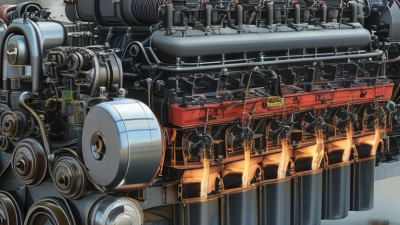
A gas engine converts chemical energy into mechanical power through controlled combustion inside its cylinders. In a spark-ignition engine, a measured air-and-gas mixture enters the cylinder and is compressed. A spark ignites it. Expanding hot gas pushes the piston downward, and a connecting rod turns the crankshaft. Power starts here. The crankshaft’s rotation can drive a generator, pump, or vehicle drivetrain. In a four-stroke design, intake, compression, power, and exhaust repeat in sequence. Real output depends on engine speed, mixture control, cooling, and maintenance—not just the fuel.
The U.S. Department of Energy’s Catalog of CHP Technologies reports electrical efficiencies of roughly 27–43% for natural-gas reciprocating engines, on a lower-heating-value basis. The remaining energy is not all wasted: exhaust and cooling systems can supply useful heat. The U.S. Environmental Protection Agency’s CHP technology guidance puts combined heat-and-power efficiency commonly around 70–80%, when heat is used on site. Then comes the practical trade-off. A warm exhaust pipe may signal recoverable heat, but only if a nearby process needs it. Efficiency figures also vary with load and operating conditions; a lightly loaded engine may perform below its rated point. In practice, engineers compare measured fuel input and useful output over representative operating hours, rather than relying on one catalogue number.
Gas engines differ by fuel quality, ignition method, and combustion strategy. Ten practical types for global buyers are natural-gas spark-ignition engines, lean-burn engines, stoichiometric engines, dual-fuel gas-diesel engines, biogas engines, landfill-gas engines, sewage-gas engines, syngas engines, coal-mine-methane engines, and hydrogen-capable engines. These categories can overlap. A biogas unit, for example, may also use lean-burn combustion.
Fuel makes a real difference. Raw biogas may contain moisture and contaminants, so buyers should check treatment requirements and permitted fuel ranges. Landfill gas composition can shift over time. That matters. Syngas varies with its production process, while hydrogen-capable models may accept only specified blends. Confirm the exact fuel specification with the engine supplier, then compare it with tested operating data—not just a general product description.
Combustion design brings further trade-offs. Lean-burn engines use excess air and can suit steady power generation, but performance depends on controls and site conditions. Stoichiometric engines operate near a balanced air-fuel ratio and often pair with exhaust treatment. Dual-fuel engines can use gas alongside a pilot fuel, though the required share varies by design. Check load profile, ambient temperature, service access, emissions data, and fuel-cleaning costs. The “ten types” are a useful guide, not a perfect taxonomy. A neat label cannot replace a site-specific assessment.
Where a gas engine works best depends on fuel quality, operating hours, and the shape of the load. Spark-ignited natural-gas engines are common in hospitals, campuses, and factories needing dependable on-site electricity. When their heat is captured for hot water or steam, combined heat and power systems can use fuel more efficiently. Lean-burn designs suit steady, larger loads, such as industrial plants and district energy sites. Rich-burn engines often fit smaller installations with fluctuating demand. Not everywhere.
Biogas engines can run on gas collected from wastewater treatment or agricultural digestion, but the gas needs suitable cleaning and conditioning. Landfill gas can also serve engines designed for its variable composition; operators should monitor moisture and contaminants closely. High-speed engines are practical for compact backup generators, while medium-speed units often serve continuous power or marine applications. Dual-fuel engines are useful where operators need flexibility between gaseous fuel and a pilot liquid fuel. It depends. A model that performs well at sea level may lose output at high altitude, and frequent starts can change maintenance needs. I would compare the site’s hourly load curve and actual fuel analysis before choosing a type. Those details are easy to underestimate.
The categories below are grouped by fuel, combustion approach, or typical application, so some types can overlap. Actual fuel suitability depends on engine design, gas quality, emissions requirements, and local regulations.
| Gas engine type | Typical fuel | Where it is used | Key operating characteristic |
|---|---|---|---|
| 1. Natural-gas spark-ignition engine | Pipeline natural gas or compressed natural gas (CNG) | Distributed power generation, commercial vehicles, buses, and industrial equipment | An ignition system initiates combustion of a premixed or metered gas-and-air charge. |
| 2. Lean-burn natural-gas engine | Natural gas mixed with more air than is needed for complete combustion | Stationary power plants, combined heat and power (CHP), and gas compression sites | Lean operation can reduce combustion temperatures and nitrogen oxide formation; performance depends on engine and emissions-system design. |
| 3. Stoichiometric natural-gas engine | Natural gas at a near-stoichiometric air-to-fuel ratio | Stationary generation, CHP, and some heavy-duty vehicle applications | The near-stoichiometric exhaust can be treated with a three-way catalyst when operating conditions and system design allow. |
| 4. LPG spark-ignition engine | Liquefied petroleum gas (LPG), mainly propane or propane-rich mixtures | Forklifts, industrial vehicles, fleet vehicles, and equipment in locations with LPG supply | LPG is stored as a liquid under pressure and supplied to the engine as a fuel gas or vapor, depending on the system. |
| 5. Bi-fuel gasoline/LPG engine | Gasoline or LPG, selected as the operating fuel | Light-duty vehicles and fleets that need access to both conventional fueling and LPG | The engine generally runs on one fuel at a time and can switch between separate fuel systems. |
| 6. Dual-fuel gas-diesel engine | Natural gas or another compatible gas, with a small diesel pilot quantity in many designs | Marine propulsion, power generation, and selected industrial or heavy-duty applications | The diesel pilot can ignite the gas-air mixture; the gas substitution rate varies with engine load and design. |
| 7. Biogas engine | Biogas from anaerobic digestion, typically containing methane, carbon dioxide, and trace impurities | Wastewater treatment plants, farms, food-waste facilities, and digesters | Gas usually needs moisture and contaminant control; methane content and gas quality influence output and maintenance needs. |
| 8. Landfill-gas engine | Landfill gas, principally methane and carbon dioxide, with variable trace contaminants | Landfill gas-to-energy projects and on-site electricity or CHP installations | Gas composition can fluctuate; treatment and engine setup must account for moisture and contaminants such as siloxanes. |
| 9. Coal-mine-methane engine | Methane recovered from coal mines, including some ventilation-air or drainage gas applications | Mine-site power generation and energy recovery from suitable methane streams | Methane concentration and flow can vary considerably; only gas streams compatible with the equipment can be used reliably. |
| 10. Hydrogen-fueled internal-combustion engine | Hydrogen, or hydrogen-containing fuel blends where the engine is designed and approved for them | Pilot projects, research, and selected industrial or transport demonstrations | Hydrogen combustion requires purpose-designed fuel, ignition, and emissions controls; deployment remains more limited than natural-gas engine use. |
Comparing gas engines starts with the duty cycle, not the headline price. A spark-ignition reciprocating engine can suit variable loads and frequent starts. Lean-burn designs generally prioritize fuel efficiency and lower nitrogen oxide emissions. Gas turbines may fit larger, steadier loads, but their performance can fall at high temperatures or partial load. Check fuel composition, altitude, cooling needs, and local service access before comparing quotes.
Efficiency needs context. The U.S. Environmental Protection Agency’s Catalog of CHP Technologies (2017) reports electrical efficiencies of roughly 35–45% for natural-gas reciprocating engines, depending on size and configuration. With useful heat recovery, total CHP efficiency can reach about 70–80%. The U.S. Energy Information Administration reported that natural gas supplied about 43% of U.S. utility-scale electricity generation in 2023, underscoring the fuel’s role—but not guaranteeing a buyer’s fuel price or supply. Details matter. Compare heat rate, expected annual hours, maintenance intervals, emissions controls, and parts availability using the same operating assumptions.
Ask for lifecycle costs over the planned service period, including overhaul work, lubricants, downtime, and backup power. A small difference in fuel consumption compounds across thousands of hours. Not always. Real-world performance can diverge from a clean spreadsheet, especially with frequent cycling or poor maintenance. Request site-specific guarantees, then test the assumptions against actual load and fuel records.
Indicative efficiency ranges at rated load. Compare engine configuration, fuel quality, operating profile, and maintenance needs before purchase; actual performance varies by model and site conditions.
Bars show typical ranges, not guaranteed performance or a ranking. Electrical efficiency is lower than total CHP efficiency when useful recovered heat is included.